RNDr. Jiří Jakubínský, Ph.D. – head
Scientists:
MSc. Ahmed Mohammed Ahmed Alhuseen, Ph.D.
Mgr. et Mgr. Ján Babej, Ph.D.
doc. RNDr. Pavel Cudlín, CSc.
Ing. Ondřej Cudlín, Ph.D.
Mgr. Jan Donoval
RNDr. Magdaléna Edwards , Ph.D.
Ing. Marcela Prokopová, Ph.D.
Ing. Jan Purkyt, Ph.D.
Ing. Pavel Samec, Ph.D.
doc. Mgr. Martin Šlachta, Ph.D.
Mgr. Lenka Štěrbová
Ing. Renata Včeláková, Ph. D.
Others:
Eliška Harsová
Zdeňka Kovaříková
Ing. Vladana Procházková
Motto
Understanding the effects of the interaction between human activities and climate change on ecosystem functioning in the landscape is essential for designing effective measures that support ecosystems and ensure the irreplaceable benefits they provide to society.
Objectives and Research Focus
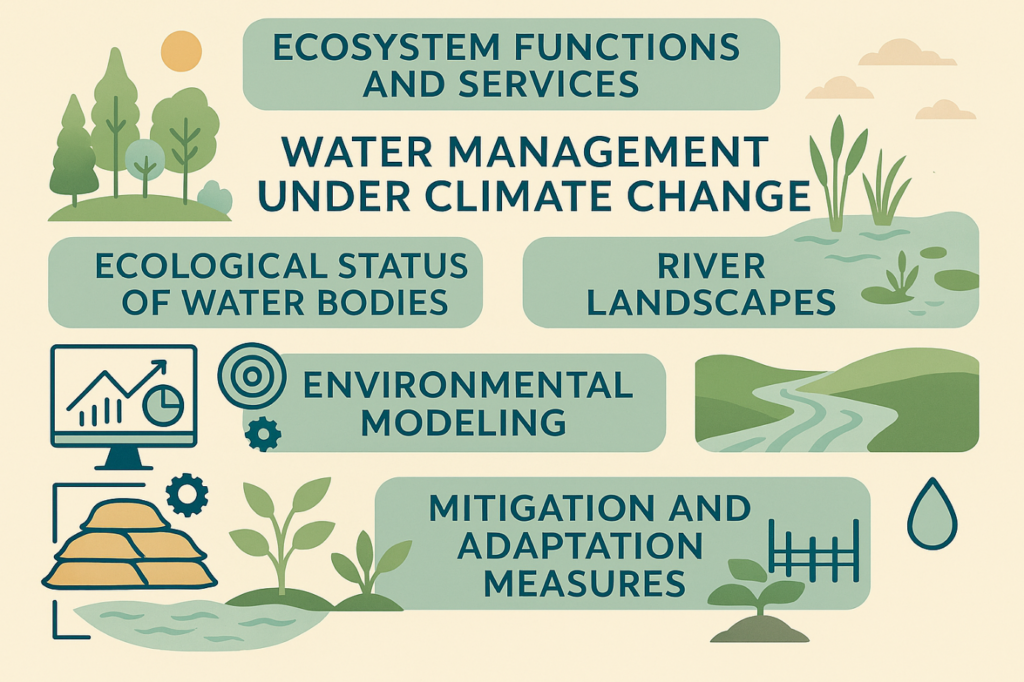
The aim of the research team is to contribute to the understanding of the impacts of global change on ecosystem functioning, with particular emphasis on aquatic and water-dependent ecosystems. Our research integrates multiple spatial scales and methodological approaches. In addition to original results of both basic and applied research, the outputs include scientifically grounded proposals of mitigation and adaptation measures aimed at reducing these impacts.
Key Activities
Our key activities include:
- Analyses and modelling of selected ecosystem functions of the landscape and research on the energy–material balance of ecosystems and catchments, with regard to their importance under ongoing climatic and environmental change;
- Identification of stressors in riverine landscapes (watercourses and floodplains) and the development of approaches for assessing and improving their ecological status and for preventing hydrological extremes;
- Addressing current challenges in water management under Central European conditions related to the impacts of environmental change, with emphasis on recent advances in ecohydrological research and the development of the European legislative framework in water management.
From a methodological perspective, the study of the main segments of global change impacts (atmosphere and climate, ecosystems, socio-economic systems) focuses primarily on the interactions among all three segments. The principal methodological approach involves the development of models and other tools for studying ecosystem functions and services in relation to key driving forces, particularly climate change and land-use change.
Information on the department’s research activities, ongoing projects, and outputs can be found at: www.funkcnikrajina.com
Main Research Directions of the Department
Impacts of Global Climatic and Environmental Change on Selected Ecosystem Functions as a Basis for Ecosystem Services Assessment
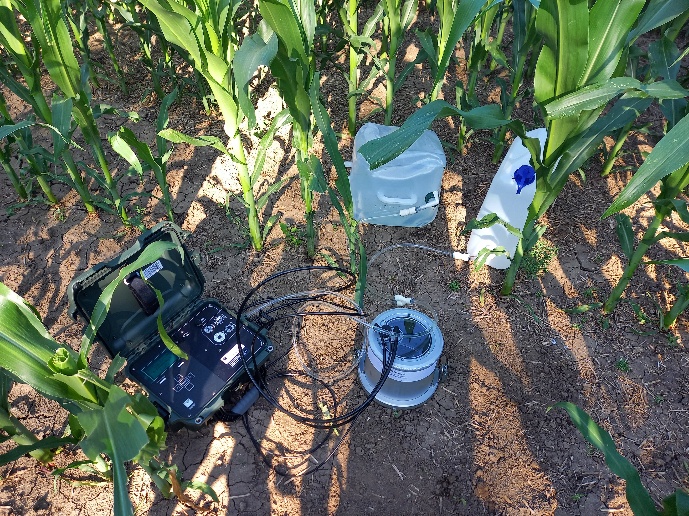
- Research on the performance of selected ecosystem functions based on specific biophysical indicators and prediction of their future development considering expected impacts of climate change and land-use change.
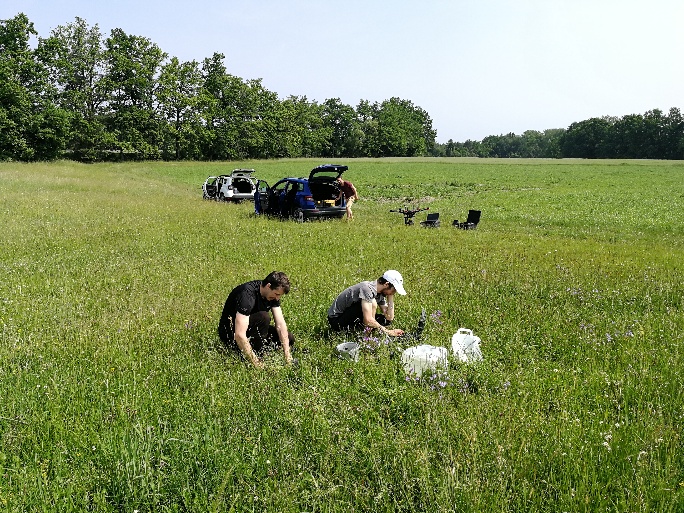
- Operation of proprietary observational infrastructure and management of databases necessary to ensure accurate and up-to-date data inputs for calculating indicators of ecosystem function performance.
- Analyses of forest ecosystem responses to environmental change and selected disturbances.
- Development of a platform for assessing landscape vulnerability to climate change impacts, including proposals of typified measures to mitigate identified risks.
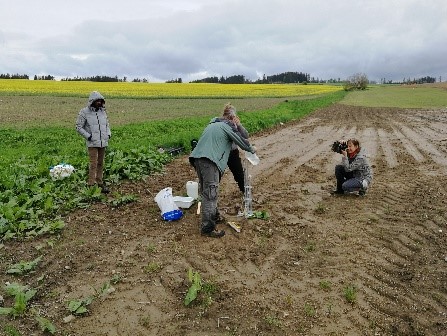
- Experimental verification of the effects of different types of measures (especially water-management-related) on the quality of ecosystem functions under diverse natural conditions and under model applications of different land-management approaches.

Impacts of Anthropogenic Pressure and Related Environmental Change on the Quality and Quantity of Surface Waters
- Research on key aspects of river ecosystems under conditions of climatic and environmental change, including impacts on hydrological balance, sediment dynamics, nutrients, pollutants, and biodiversity.
- Development of methodological procedures for assessing individual components of the ecological status of surface water bodies, riparian zones, and floodplains.
- Research on the influence of the presence and parameters of riparian habitats on surface water quality in agricultural landscapes under environmental change.
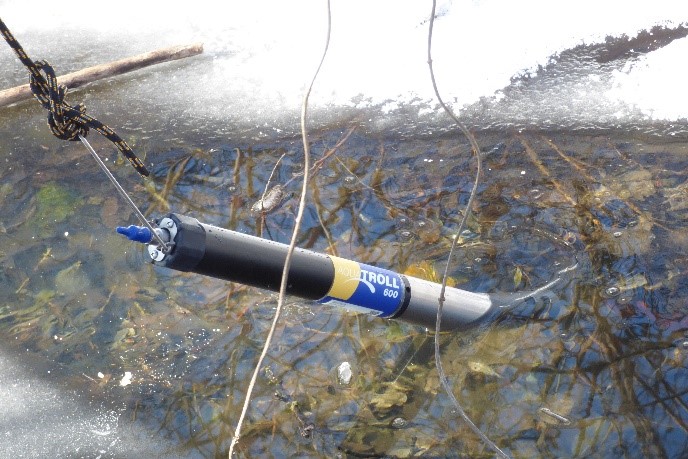
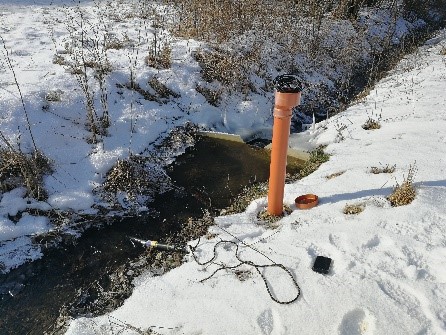
- Operation of proprietary observational infrastructure focused on continuous monitoring of selected physico-chemical characteristics of surface and subsurface waters.

Currently Ongoing Projects (Selected)
- Assessment of hybrid infrastructure for hazard mitigation with respect to climate change scenarios (2023–2025, GAČR 23-04520L)
- Integration of the ecosystem services assessment concept into future river basin management plans (2024–2026, TAČR SS07010080)
- Unified identification of landscape vulnerability and methodology for designing adaptation measures with special emphasis on ecosystem functions (2024–2026, Interreg SK-CZ NFP403201DPH4)
- Scientifically grounded baseline data for the revitalization of marginalized mountain regions in the Czech Republic (2023–2026, Inter-COST MŠMT LUC23169)
- Flash floods under conditions of environmental change (2023–2027, AV21 Strategy – Dynamic Planet Earth)
- Risk assessment of realistic sublethal pesticide doses in food resources of solitary bees to stabilize pollinator ecosystems, with a focus on fruit production (2024–2028, Ministry of Agriculture QL24010200)
Applied Outputs (Selected)
- Methodology for assessing the hydromorphological status of water bodies in the Czech Republic (Methodology approved by the Ministry of the Environment – NMetS, 2025)
- Software for automation of hydromorphological assessment of watercourses (specialized software – R, 2024)
- Database of hydromorphological parameters (specialized public database – S, 2024)
- Assessment of selected sections of water bodies based on hydromorphological components (specialized expert map – Nmap, 2024)
- Methodology for assessing the degree of degradation of ecosystem functions of floodplains in the Czech Republic (Methodology approved by the Ministry of the Environment – NMetS, 2025)
- Potential of floodplains in the Czech Republic for providing selected ecosystem functions (specialized expert map – Nmap, 2025)
- Device for monitoring pesticide content in soil using solitary bees (utility model, 2025)
Selected Recent Publications
Raška, P., Dolejš, M., Zupanc, V., Louda, J., Jakubínský, J., & Bezak, N. (2025). Generic ‘nature-based’framing may distort understanding of the effectiveness of hydrometeorological risk reduction measures. Ecological Indicators, 180, 114364. (IF 7.4)
Tomášová, G., Samec, P., Pavlů, L., & Holík, L. (2025). The main causes of the variation in the soil aggregate proportion and stability along gradient of natural forests in the outer Western Carpathians, Czech Republic. Geoderma, 462, 117543. (IF 6.6)
Pechanec, V., Prokopová, M., Včeláková, R., Štěrbová, L., Cudlín, O., Pohanková, T., Grill, S., Salvati, L, Cudlín, P. (2025). Assessing habitat connectivity: A comparative analysis of four methodologies applied to peri-urban landscapes. Science of The Total Environment, 1003, 180729. (IF 8.0)
Šlachta, M., Erban, T., Votavová, A., Tomešová, D., Václavíková, M., Halešová, T., Shcherbachenko, E., Bešta, T., Edwards-Jonášová, M., Včeláková, R., Procházková, V., Cudlín, P. (2025). Moderate use of pesticides in allotment gardens as indicated by their residues in larval food provisions of Osmia solitary bees. Journal of Apicultural Research, 64(1), 254-266. (IF 1.9)
D’Agata, A., Cudlín, P., Vardopoulos, I., Schinaia, G., Corona, P., & Salvati, L. (2024). Assessing the spatial coherence of forest cover indicators from different data sources: A contribution to sustainable development reporting. Ecological Indicators, 158, 111498. (IF 6.2)
Jakubínský, J.; Krásná, K.; Prokopová, M.; Cudlín, O.; Purkyt, J.; Štěrbová, L.; Pechanec, V.; Cudlín, P. Assessment of the potential natural status of riparian zones in the Czech Republic. River Research and Application 39(1): 95-107, 2022 (IF 2.78)
Egidi, G.; Quaranta, G.; Rosanna, S.; Salvati, L.; Včeláková, R.; Cudlín, P. Urban sprawl and desertification risk: unraveling the latent nexus in a mediterranean country. Journal of Environmental Planning and Management 65(3): 441-460, 2022 (IF 3.37)
Urbanič, G.; Politti , E.; Rodríguez- González, P. M.; Payne, R.; Schook, D.; Alves, M. H.; Andelkovic, A.; Bruno, D.; Chilikova-Lubomirova, M.; Di Lonardo, S.; Egozi, R.; Garofane Gomez, V.; Gomes Marques, I.; Tánago del, M. G.; Gultekin, Y. S.; Gumiero, B.; Hellsten, S.; Hinkov, G.; Jakubínský, J.; Janssen , P. Riparian Zones- From Policy Neglected to Policy Integrated. Frontiers in Environmental Science 99(10): 1-8, 868527, 2022 (IF 4.58)
Pastor, A. V.; Tzoraki, O.; Bruno, D.; Kaletová, T.; Mendoza-Lera, C.; Alamanos, A.; Brummer, M.; Datry, T.; De Girolamo, A. M.; Jakubínský, J.; Logar, I.; Loures, L.; Ilhéu, M.; Koundouri, P.; Nunes, J. P.; Quintas-Soriano, C.; Sykes, T.; Truchy, A.; Tsani, S.; Jorda-Capdevilla, D. Rethinking ecosystem service indicators for their application to intermittent rivers. Ecological Indicators 137: 108693, 2022 (IF 6.26)
Jakubínský, J.; Prokopová, M.; Raška, P.; Salvati, L.; Bezak, N.; Cudlín, O.; Cudlín, P.; Purkyt, J.; Vezza, P.; Camporeale, C.; Daněk, J.; Pástor, M.; Lepeška, T. Managing floodplains using nature-based solutions to support multiple ecosystem functions and services. Wiley Interdisciplinary Reviews: Water 2021: 1-19, Article number e1545, 2021 (IF 7.43)