
Click for the search
Strategie AV21

News
Just released the new issue of the CzechGlobe Newsletter
More 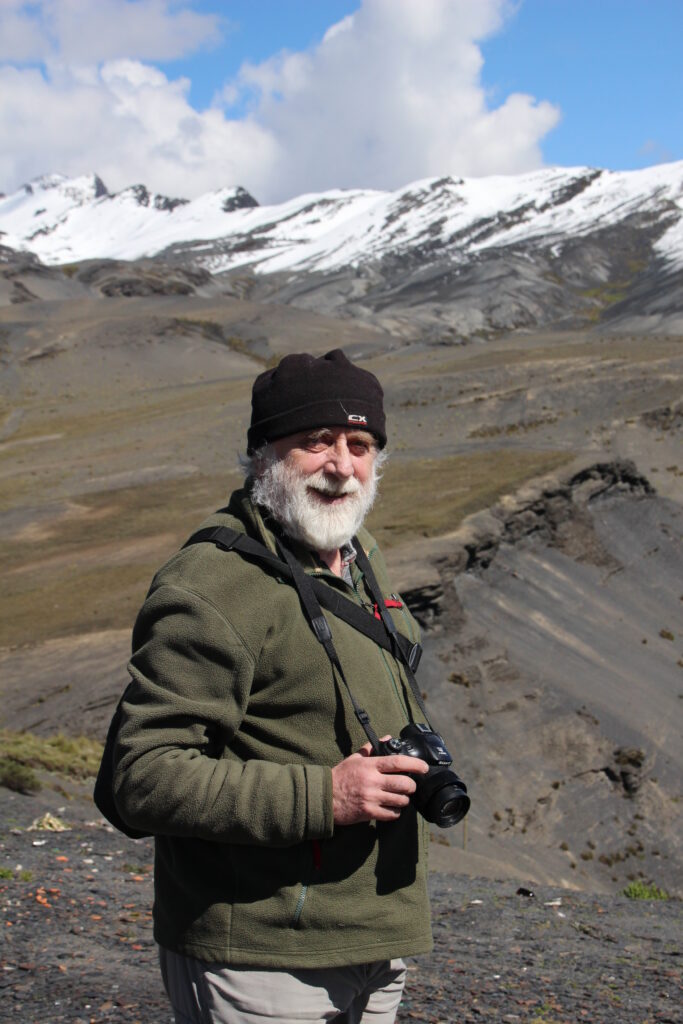
It is with profound sadness that we announce the passing of Prof. RNDr. Pavel Kindlmann, DrSc., a distinguished Czech ecologist, mathematician, and long-time collaborator of CzechGlobe.
Professor Kindlmann headed the Department of Biodiversity at the Global Change Research Institute of the Czech Academy of Sciences from 2001 to 2023. His research focused primarily on population biology and the application of mathematical approaches in ecology. He inspired and mentored generations of students at the University of South Bohemia in České Budějovice, the Faculty of Science of Charles University, and numerous universities abroad, where he held visiting appointments.
Professor Kindlmann was devoted to nature not only through his scientific work but also through his deep personal commitment. He actively participated in public discussions on nature conservation, advocating for the protection of his beloved orchids and for the preservation of the unique natural values of Šumava National Park.
His passing is a great loss to the Czech scientific community and to all who had the privilege of knowing and working with him.
May he rest in peace.
More 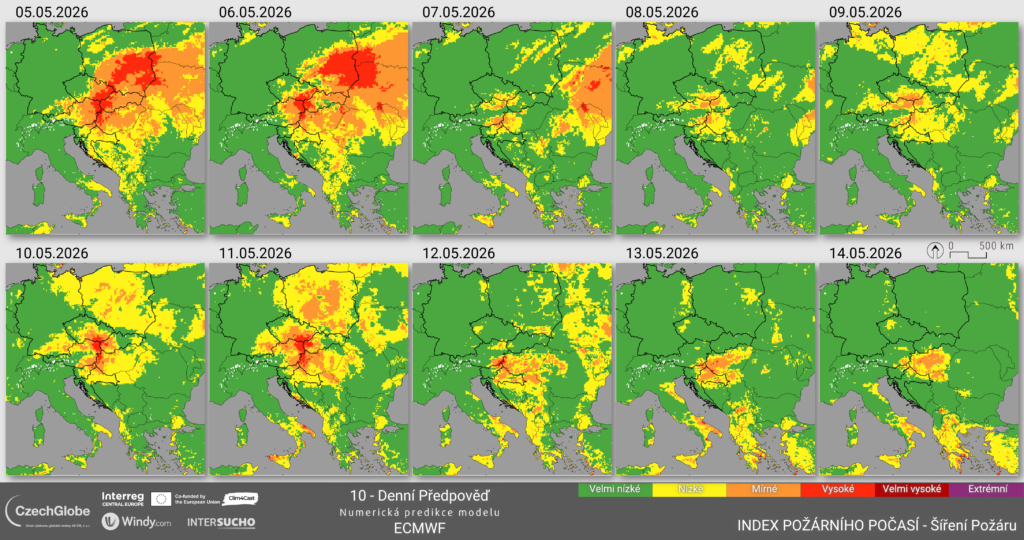
The Clim4Cast forecasting tool was presented at the EGU General Assembly 2026 in Vienna by Lukáš Dolák. The original contribution was also chosen to be presented at a press conference for journalists, along with 17 other contributions out of a total of 20,000. Within the Press conference (https://www.egu.eu/gamedia/2026/press-conferences/#PC1), the most outstanding Clim4Cast outputs were introduced, including the forecasting tool. The attending journalists appreciated both the web platform and the tool. We honestly hope that this event contributed to spreading the word not only among journalists but also to the wider public and researchers.
More 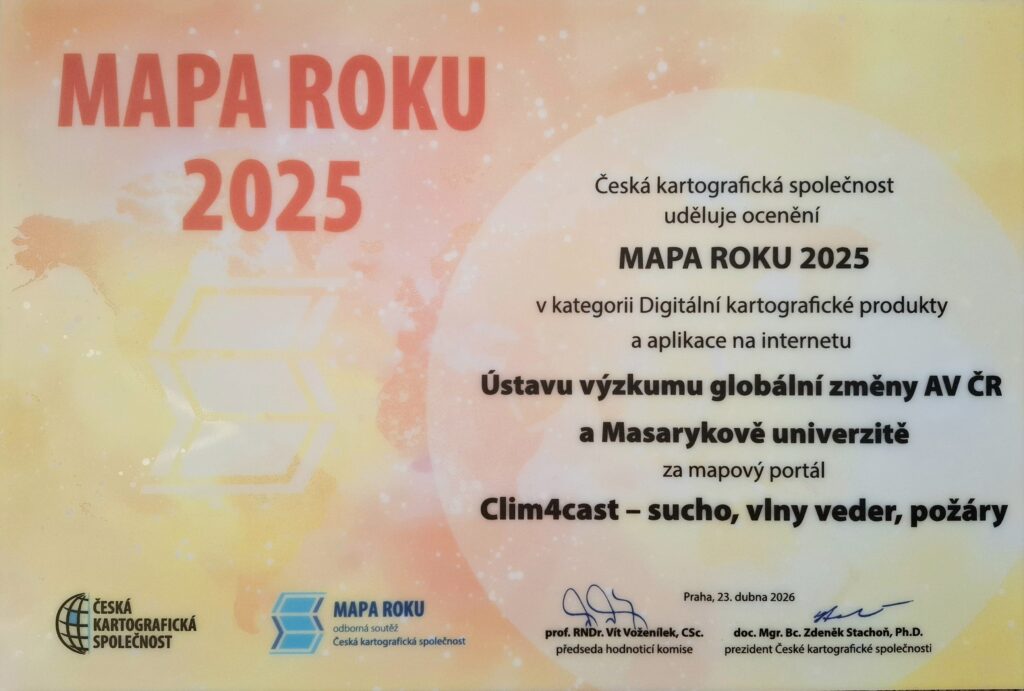
The expert jury of the Czech Cartographic Society has announced the results of the prestigious Map of the Year 2025 competition across six categories. The Clim4Cast project team, from the Global Change Research Institute CAS and Masaryk University, also participated. In the category Digital Cartographic Products and Online Applications, the team received an award among 14 competing entries for the Clim4Cast map portal – drought, heatwaves, wildfires.
More 
3 May 1943 – 1 February 2026
With deep sorrow, we announce that on 1 February 2026, Sune Linder, Emeritus Professor at the Swedish University of Agricultural Sciences in Uppsala and at the Southern Swedish Forest Research Centre in Alnarp (Sweden), passed away.
More Events / Projects / Research

We stand for Ukraine
